By Black Wheat Team | Last updated: November 2026
Wheat noodles are noodles made mainly from wheat flour, water and salt, sometimes with egg or alkaline salts added for colour and bounce. They’re the base of lo mein, udon, ramen and many stir-fries you’ll find in US restaurants and Asian grocery stores. The type of flour, how much water goes in, and whether the dough is alkaline decide whether a noodle turns out soft, chewy or crisp. If you cook with black wheat flour, you can make your own at home too. Start with our guide on what black wheat is if the grain is new to you.
Key Takeaways
• Wheat noodles are made from wheat flour, water and salt. Egg or alkaline salts change their texture.
• Chinese, Japanese and Thai wheat noodles differ mostly in thickness, additives and cooking method.
• For frying, egg or alkaline noodles hold up best when boiled briefly and dried well first.
• They all contain gluten, including noodles made with black wheat.
What are wheat noodles made of?
They’re made from wheat flour mixed with water and salt into a firm dough, then rolled, cut, pulled or extruded. Some recipes add egg for richness and colour. Others add alkaline salts, called kansui, which make noodles springy and yellow, as in ramen.
Compared with bread dough, noodle dough is stiff. Many noodle recipes use somewhere around 30–45% water by flour weight, while a sandwich loaf can use 65% or more. That low water content is why noodle dough feels tough and almost dry at first, then smooths out after resting.
Salt tightens gluten, which helps noodles hold together in boiling water. Egg adds fat and protein, giving a richer, slightly firmer bite. Alkaline salts change how gluten and starch behave, which gives that bouncy, slippery chew.
Unlike durum pasta, most Asian noodles use common wheat flour, not semolina. We explain that difference in our guide to durum semolina wheat pasta.
What are the main types of Chinese wheat noodles?
Chinese wheat noodles include hand-pulled lamian, knife-cut daoxiao mian, thin egg noodles used for wonton soup, and lo mein and chow mein noodles. They range from thick and chewy to thin and springy, and many are made with egg or alkaline salts.
China has a huge noodle tradition, especially in the wheat-growing north. Hand-pulled noodles are stretched and folded until they form long, even strands. Knife-cut noodles are shaved straight from a block of dough into boiling water, so they come out thick in the middle and thin at the edges.
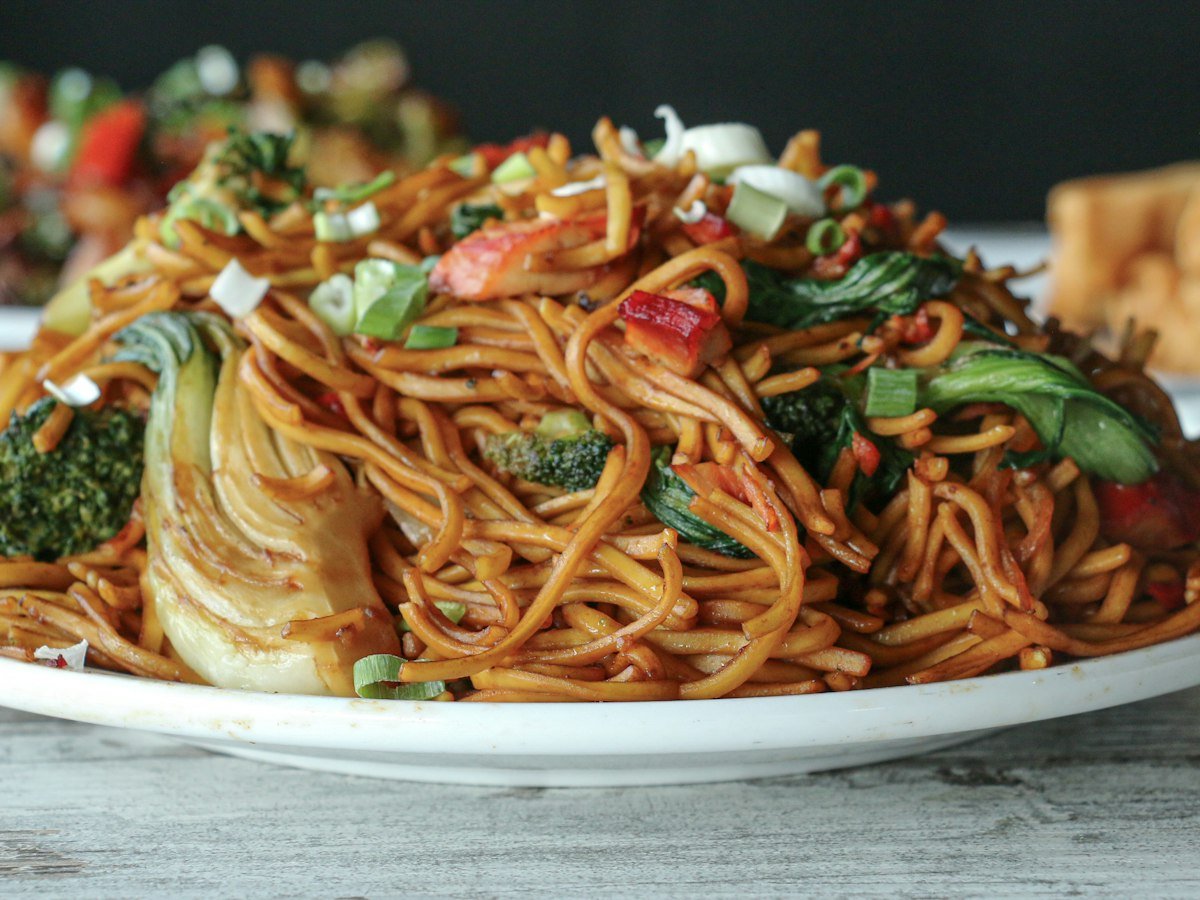
In the US, the Chinese wheat noodles you’ll most likely meet are lo mein and chow mein. Lo mein noodles are usually boiled and tossed with sauce. Chow mein noodles are often fried until some strands turn crisp. Both are commonly made with egg, and some brands add alkaline salts too.
Which Japanese wheat noodles should you know?
The best-known Japanese wheat noodles are udon, somen and ramen. Udon is thick, soft and chewy. Somen is very thin and usually served cold. Ramen is made with alkaline water, which gives it a yellow colour and springy texture. Soba is mainly buckwheat, often blended with wheat.

Udon dough is traditionally kneaded firmly, sometimes even by foot in a bag, to build a smooth, bouncy chew. Somen is stretched until it’s as thin as thread and dried in bundles. Ramen noodles get their character from kansui, the same alkaline salts used in some Chinese noodles.
Soba is worth a quick note. It’s made largely from buckwheat, which is not a wheat at all, but many soba noodles include wheat flour to help the dough hold together. If you’re comparing those grains, read black wheat vs buckwheat.
Are Thai noodles made from wheat?
Most Thai noodles are made from rice, including the noodles in pad thai and pad see ew. Thai wheat noodles do exist, though. The main one is ba mee, a yellow egg noodle used in soups and in dishes like khao soi, where some noodles are also deep-fried for a crunchy topping.
That surprises a lot of people. If you’re avoiding gluten and ordering Thai food, rice noodles are often the safer choice. Always check, because sauces such as soy sauce can contain wheat. Ba mee, on the other hand, is a true wheat noodle, close in style to Chinese egg noodles, and is often sold fresh in Asian markets.
Here’s a quick side-by-side of the noodles we’ve covered:
| Noodle | Origin | Main ingredients | Texture | Best used for |
|---|---|---|---|---|
| Lo mein | Chinese | Wheat flour, egg | Soft, chewy | Tossed in sauce |
| Chow mein | Chinese | Wheat flour, egg, sometimes alkali | Springy, crisp when fried | Pan-frying |
| Udon | Japanese | Wheat flour, water, salt | Thick, bouncy | Hot soups, stir-fries |
| Somen | Japanese | Wheat flour, water, salt | Very thin, delicate | Cold dishes |
| Ramen | Japanese | Wheat flour, alkaline water | Springy, firm | Broth bowls |
| Ba mee | Thai | Wheat flour, egg | Springy, slightly firm | Soups, khao soi |
What are the best wheat noodles for frying?
The best wheat noodles for frying are egg noodles or alkaline noodles, such as chow mein, ba mee or fresh ramen-style noodles. They stay springy and crisp at the edges without breaking apart. Boil them briefly, drain, rinse, dry well and toss with a little oil before they hit the pan.

Ever had stir-fried noodles turn into a sticky clump? That usually comes from noodles that are overcooked or still wet. Here’s what helps.
Undercook slightly. Boil for about a minute less than the packet says. The noodles will finish cooking in the pan.
Rinse and dry. Rinse in cold water to wash off surface starch, then spread them on a tray or clean towel for 10–15 minutes.
Use high heat and space. A hot wok or wide skillet with a tablespoon or two of oil works best. Spread the noodles in a thin layer and leave them alone for a couple of minutes so the bottom crisps.
Add sauce last. Toss sauce in at the end so the crisp edges don’t go soggy.
Thick udon also pan-fries well for dishes like yaki udon, though it stays soft rather than crisp. Very thin somen is too delicate for most frying.
Want a whole grain version of these noodles? Our whole wheat noodles guide covers whole wheat ramen, udon and egg noodles, plus a homemade recipe.
Can you make wheat noodles with black wheat flour?
Yes. Black wheat flour contains gluten, so it makes a workable noodle dough. Because it’s usually whole grain, the noodles are softer and more fragile. Blending about 30–40% black wheat flour with all-purpose or bread flour gives darker, earthy noodles that still hold together when boiled.

A simple starter recipe for two people:
Ingredients: 100 g (about ¾ cup) black wheat flour, 200 g (about 1⅔ cups) all-purpose or bread flour, 3 g (½ tsp) salt and about 135–150 g (roughly ⅔ cup) water.
Method: Dissolve the salt in the water. Mix it into the flours until shaggy, then knead for 8–10 minutes. The dough should be firm, not sticky. Wrap and rest for 30–60 minutes so the bran softens and the gluten relaxes. Roll thin, dust with flour, fold loosely and cut into strips. Boil for 2–4 minutes, depending on thickness.
A useful tip from the science side: black wheat’s colour comes from anthocyanins, and these shift colour with pH. If you add alkaline salts to make ramen-style noodles, black wheat dough may turn greenish or blue-grey. It’s harmless, just surprising. Plain salt-and-water noodles usually stay purple-brown.
Black wheat flour is more perishable than refined flour because of the natural oils in its bran and germ. Keep it airtight, as explained in how to store black wheat flour.
Choosing flour for homemade noodles? Our whole wheat flour guide explains how regular, white whole wheat and stone ground flours differ.
Are wheat noodles healthy?
They can be part of a balanced meal. Plain noodles provide energy from carbohydrates plus some protein. Refined versions are low in fiber, so whole wheat or black wheat noodles add more. Serving size, sodium in instant noodles and sauces, and frying oil make the biggest difference.
Instant fried noodles and many takeout sauces can be high in sodium and fat. Pairing noodles with vegetables and a lean protein makes a more balanced plate. You can compare nutrient values for different noodle types on USDA FoodData Central.
Every one of these noodles contains gluten, black wheat included, as covered in is black wheat gluten-free? If you’re managing diabetes, weight or blood pressure, are pregnant, or are cooking for young children, please consult your doctor or a registered dietitian about portions and the best noodle choices for you.
Some dumpling wrappers use a different part of the grain entirely. Our wheat starch guide explains why it gives dim sum its see-through look.
Frequently Asked Questions
What is the difference between wheat noodles and rice noodles?
Wheat noodles are made from wheat flour and contain gluten, which gives them a chewy, stretchy bite. Rice noodles are made from rice flour, are naturally gluten-free and tend to be softer and more slippery.
Are udon noodles made from wheat?
Yes. Udon is a Japanese wheat noodle made from wheat flour, water and salt. It’s thick and chewy and works in both hot soups and stir-fries.
Which noodles are best for chow mein?
Thin egg noodles labelled for chow mein or pan-frying work best. Fresh ramen-style noodles are a good substitute because their alkaline dough stays springy in a hot pan.
Why are some wheat noodles yellow?
Yellow noodles usually contain egg or alkaline salts. Alkaline salts react with natural pigments in wheat flour, giving a yellow colour and a firmer, springier texture.
Can people with diabetes eat wheat noodles?
Many people with diabetes include noodles in their meals, but portion size and what you serve with them matter. Please consult your doctor or a registered dietitian for advice that fits your situation.
How do I store fresh wheat noodles?
Dust fresh noodles with flour, store them in an airtight bag in the fridge for 2–3 days, or freeze them for up to about a month. Cook frozen noodles straight from the freezer.
Final Thoughts
Noodles made from wheat come in more styles than most of us realise, from thick udon to crisp pan-fried chow mein. Once you understand the role of flour, water, egg and alkali, it’s much easier to choose the right noodle for a dish, or make your own. If you’d like to keep exploring black wheat in the kitchen, try our black wheat flour roti recipe or browse the recipes section.
Have a question about noodles or black wheat? Get in touch with us.
This article is for general information only and is not medical or nutritional advice. Black wheat and all wheat noodles contain gluten.