By Black Wheat Team | Last updated: November 2026
Whole wheat couscous is couscous made from whole grain durum wheat instead of refined semolina, so it keeps more of the bran and germ. It cooks just as fast as regular couscous, about 5–7 minutes off the heat, with a slightly nuttier taste, a light tan colour and more fiber. It’s a handy whole grain side for weeknights, salads and meal prep. Below you’ll find how to cook it, how it compares with regular couscous, quinoa and bulgur, and an easy lemon-herb couscous salad. Couscous starts with durum wheat, which we explain in our durum semolina guide.
Key Takeaways
• Couscous isn’t a grain. It’s tiny pasta made from durum wheat, so it contains gluten.
• Whole wheat couscous uses whole grain durum and has roughly two to three times the fiber of regular couscous.
• For fine couscous, use about 1¼ cups boiling liquid per cup, cover and rest for 5–7 minutes.
• Pearl (Israeli) couscous is larger, simmers for 8–12 minutes, and also comes in whole wheat.
What is whole wheat couscous?
Whole wheat couscous is made by rolling whole grain durum wheat flour or semolina with water into tiny granules, then steaming and drying them. Regular couscous uses refined durum semolina. Because the whole grain version keeps more bran and germ, it’s darker, nuttier and higher in fiber, but it cooks and tastes very similar.
Couscous comes from North Africa, where it was traditionally rolled by hand and steamed over a stew in a pot called a couscoussier. Most couscous sold in US stores today is “instant”: it’s already been steamed and dried, so you only need to rehydrate it.
Here’s a useful fact that surprises many people: couscous is technically pasta, not a grain. It’s made from wheat dough, just in very small pieces. That’s why it cooks so fast and why it isn’t gluten-free.

How do you cook whole wheat couscous?
Bring 1¼ cups (300 ml) water or broth to a boil with ½ teaspoon salt and 1 tablespoon olive oil. Stir in 1 cup (about 175 g) whole wheat couscous, cover, remove from heat and rest for 5–7 minutes. Fluff with a fork. It makes about 3 cups, enough for 4 side servings.
Whole wheat couscous usually needs a little more liquid and a minute or two longer than regular couscous, because the bran absorbs water more slowly. If it’s still firm after 7 minutes, sprinkle in a tablespoon of hot water, cover again and wait 2 minutes.
For extra flavor: toast the dry couscous in the olive oil for 2 minutes before adding the boiling liquid. It deepens the nutty taste. Using stock instead of water helps too.
For fluffy grains: fluff with a fork, not a spoon, and don’t stir while it rests. Stirring too early mashes the granules together.
For pearl couscous: simmer whole wheat pearl couscous in plenty of salted water, like pasta, for 10–12 minutes until tender, then drain. Regular pearl couscous takes about 8–10 minutes.
What are the types of couscous?
The main types are fine Moroccan couscous, the small, quick-cooking kind most common in stores; pearl or Israeli couscous, larger toasted balls of pasta; and Lebanese couscous, or moghrabieh, the largest. All are made from wheat, and most are available in whole wheat versions in larger supermarkets and natural food stores.
Fine couscous suits salads, stuffed vegetables and as a bed for stews. Pearl couscous has a chewier, pasta-like bite that holds up well in soups and warm grain bowls. Lebanese couscous is usually simmered in broth and served with chicken or chickpeas.
In 2026, whole wheat fine couscous is fairly easy to find in US supermarkets. Whole wheat pearl couscous is less common but available in many natural food stores and online. Prices vary by store, brand and pack size.
Is whole wheat couscous healthier than regular couscous?
Yes, generally. Whole wheat couscous has more fiber, and typically more magnesium and other minerals, than regular couscous made from refined semolina. Calories are similar. Regular couscous is low in fiber, about 1.4 g per 100 g cooked according to USDA data, so the whole wheat version is a simple upgrade.
Fiber varies by brand, so compare labels. Many whole wheat couscous products list two to three times the fiber of regular couscous per serving.
Couscous is still a carbohydrate-rich food. If you’re managing diabetes, weight or blood pressure, please consult your doctor or a registered dietitian about portions. Pairing it with vegetables, beans or protein makes a more balanced meal.
How does couscous compare with quinoa and bulgur?
Quinoa is a gluten-free seed with more protein, fiber, iron and magnesium than regular couscous. Bulgur is cracked, parboiled whole wheat with the most fiber of the three. Couscous is the fastest to cook. Whole wheat couscous sits between regular couscous and bulgur for fiber, and all wheat options contain gluten.
| Per 100 g cooked (approx.) | Regular couscous | Whole wheat couscous | Quinoa | Bulgur |
|---|---|---|---|---|
| Calories | About 112 | Similar, about 110–120 | About 120 | About 83 |
| Protein | About 3.8 g | About 4 g | About 4.4 g | About 3.1 g |
| Fiber | About 1.4 g | Varies by brand, roughly 2–4 g | About 2.8 g | About 4.5 g |
| Magnesium | About 8 mg | Higher than regular | About 64 mg | About 32 mg |
| Contains gluten | Yes | Yes | No | Yes |
| Cooking time | 5 min | 5–7 min | 15 min | 10–15 min |
Regular couscous, quinoa and bulgur figures are approximate values from USDA data. Check specific products on USDA FoodData Central.
Choose couscous when you need speed, quinoa when you need gluten-free, and bulgur when you want the most fiber and a chewier bite. They can often swap for each other in salads like tabbouleh, though cooking times differ.
What can you make with whole wheat couscous?
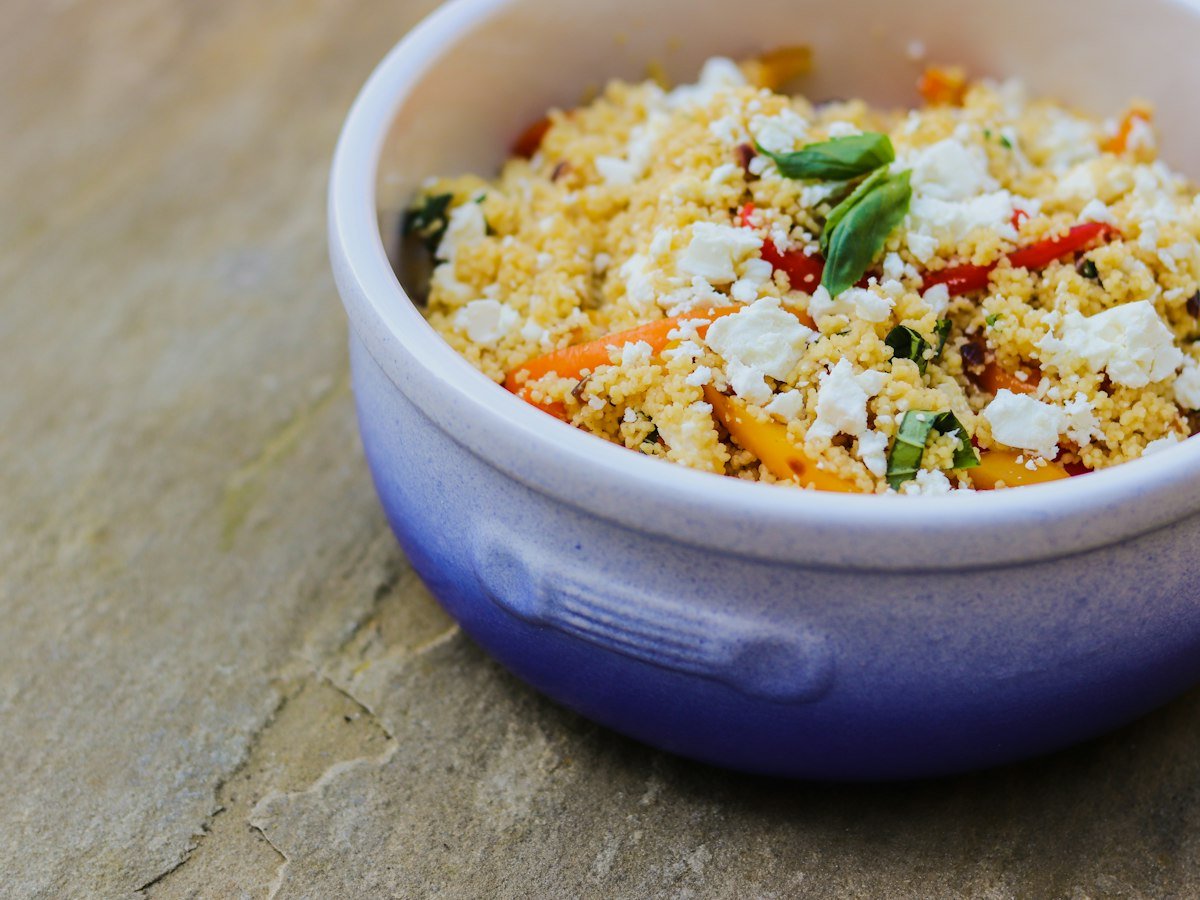
Whole wheat couscous works in salads, as a side for roasted chicken, fish or vegetables, under stews and tagines, stuffed into peppers, and in breakfast bowls with milk, fruit and nuts. A lemon-herb couscous salad with chickpeas and vegetables makes an easy lunch that keeps well for meal prep.
Lemon-herb whole wheat couscous salad (serves 4): cook 1 cup whole wheat couscous as above and let it cool. Toss with one 15-ounce (425 g) can of rinsed chickpeas, 1 diced cucumber, 1 cup halved cherry tomatoes, ½ cup chopped parsley and a handful of mint. Dress with 3 tablespoons olive oil, the juice of 1 lemon, ½ teaspoon salt and black pepper. Add crumbled feta if you like.

Leftover cooked couscous keeps in a sealed container in the fridge for 3–4 days. It also freezes well for up to 2 months. Reheat with a splash of water to loosen the grains.
Is there black wheat couscous?
Couscous is usually made from durum semolina, and black wheat couscous is not common in stores. Black wheat is a coloured variety of bread wheat, not durum, so it’s rarely made into couscous. Cracked black wheat, often sold as black wheat dalia, can be used in similar dishes like salads, pilafs and grain bowls.
Black wheat dalia cooks more like bulgur than couscous. Simmer 1 cup with about 2½ cups water for 15–20 minutes until tender, then drain any extra water and fluff. It has a chewy texture, an earthy flavor and a purple-brown colour that looks striking in a salad.
Use it in the couscous salad above in place of couscous, or as a base for roasted vegetables. Like all wheat, black wheat contains gluten. To learn more about the grain, read what is black wheat.
Frequently Asked Questions
Is whole wheat couscous gluten-free?
No. Couscous is made from wheat and contains gluten. People with celiac disease can use quinoa, millet or rice instead and should check with their doctor or a registered dietitian.
Is couscous a grain or pasta?
Couscous is pasta. It’s made from durum wheat semolina or flour mixed with water and formed into tiny granules.
How much water do I need for whole wheat couscous?
Use about 1¼ cups of boiling liquid for every 1 cup of fine whole wheat couscous. Cover and rest for 5–7 minutes.
Can I cook couscous in the microwave?
Yes. Combine couscous and boiling water in a microwave-safe bowl, cover and let it stand for 5–7 minutes. Microwave for 30 seconds if any water remains.
Is whole wheat couscous good for weight loss?
Its fiber may help you feel full, and it pairs well with vegetables and lean protein. Portion size matters most. Please consult your doctor or a registered dietitian for personal advice.
Can I replace couscous with bulgur?
Yes, in salads and pilafs. Bulgur needs to simmer or soak longer, about 10–15 minutes, and has a chewier texture.
Like couscous? Try our whole wheat orzo guide for another quick durum side.
Want more fiber? Learn how to cook bulgur wheat for pilafs and salads.
Final Thoughts
Whole wheat couscous is one of the fastest whole grain swaps you can make: the same 5-minute cooking, more fiber and a nicer, nuttier flavor. Get the liquid ratio right, fluff it with a fork, and build salads or sides around it. For another whole grain pasta to try, see our whole wheat pasta recipe.
Have a question about couscous or black wheat? Get in touch with us.
This article is for general information only and is not medical or nutritional advice. Couscous, wheat and black wheat contain gluten.