By Black Wheat Team | Last updated: November 2026
Whole wheat crackers are thin, crisp crackers made mostly or entirely from whole wheat flour, which gives them a toasty, nutty flavor and more fiber than crackers made from white flour. Homemade ones take about 30 minutes and need just flour, oil, water and salt. The secret is rolling the dough very thin and baking until the edges are deeply golden. Below you’ll find an easy whole wheat cracker recipe, homemade whole wheat saltines, fixes for soft crackers, and what to look for on store-bought boxes. For how crackers fit a calorie budget, see our whole wheat for weight loss guide.
Key Takeaways
• Roll cracker dough to about 1/16 inch (1.5 mm) for a snappy crunch.
• Docking, or pricking holes in the dough, stops crackers from puffing up.
• Saltines get their flaky layers from folding the dough, like a quick puff pastry.
• Store-bought crackers labeled “wheat” may be mostly refined flour, so check the ingredient list.
What are whole wheat crackers?
Whole wheat crackers are unleavened or lightly leavened crackers made with whole wheat flour, fat, salt and water, rolled thin and baked until crisp. They range from plain, thin wheat crackers to seeded crisps and flaky whole wheat saltines. True whole wheat crackers list whole wheat flour as the first ingredient.
Crackers are one of the easiest things to bake with whole wheat flour. They don’t need to rise, so the bran that weighs down bread doesn’t matter here. In fact, the bran adds a pleasant, slightly sweet, toasty taste that white-flour crackers lack.
Many homemade versions use a mix of whole wheat and all-purpose flour for a lighter snap. You can go 100% whole wheat; the crackers are just a little more rustic and crumbly.

How do you make whole wheat crackers at home?
Mix 1 cup (120 g) whole wheat flour, ½ cup (60 g) all-purpose flour and ½ teaspoon salt. Stir in 3 tablespoons olive oil and about ⅓ cup water to form a firm dough. Roll it 1/16 inch thick, cut into squares, prick with a fork, sprinkle with salt, and bake at 400°F for 12–16 minutes.
Makes about 40 crackers (1½-inch squares).
Step 1: preheat the oven to 400°F. Whisk the flours, salt and ½ teaspoon baking powder (optional, for a lighter texture) in a bowl.
Step 2: add the oil and rub it in with your fingers. Add water a tablespoon at a time until the dough holds together. It should feel like firm play dough, not sticky.
Step 3: rest the dough for 10 minutes. This lets the bran absorb water so it rolls without cracking.
Step 4: roll half the dough between two sheets of parchment as thin as you can, about 1/16 inch. Peel off the top sheet and slide the bottom sheet onto a baking tray.
Step 5: cut into squares with a pizza cutter (no need to separate them), prick each one with a fork, brush lightly with water and sprinkle with flaky salt.
Step 6: bake 12–16 minutes, rotating the tray halfway, until the edges are golden brown. Edge crackers bake faster, so pull them off early and return the rest for 2–3 minutes if the center is pale.
Step 7: cool on the tray. Crackers crisp up further as they cool.
How do you make whole wheat saltines?
For whole wheat saltines, rub 4 tablespoons cold butter into 1 cup whole wheat flour, 1 cup all-purpose flour, 1 teaspoon baking powder and ½ teaspoon salt. Add about ⅔ cup cold milk or water, then fold the dough in thirds twice to create layers. Roll thin, dock in rows, top with coarse salt and bake at 400°F for 12–15 minutes.
Saltines are lighter and flakier than regular crackers. Commercial saltines get that from yeast and long fermentation. At home, folding the dough a couple of times does a similar job much faster, creating thin layers that puff slightly in the oven.
The fold: roll the dough into a rectangle, fold it like a letter in thirds, turn it 90 degrees and repeat. Then roll it out to 1/16 inch.
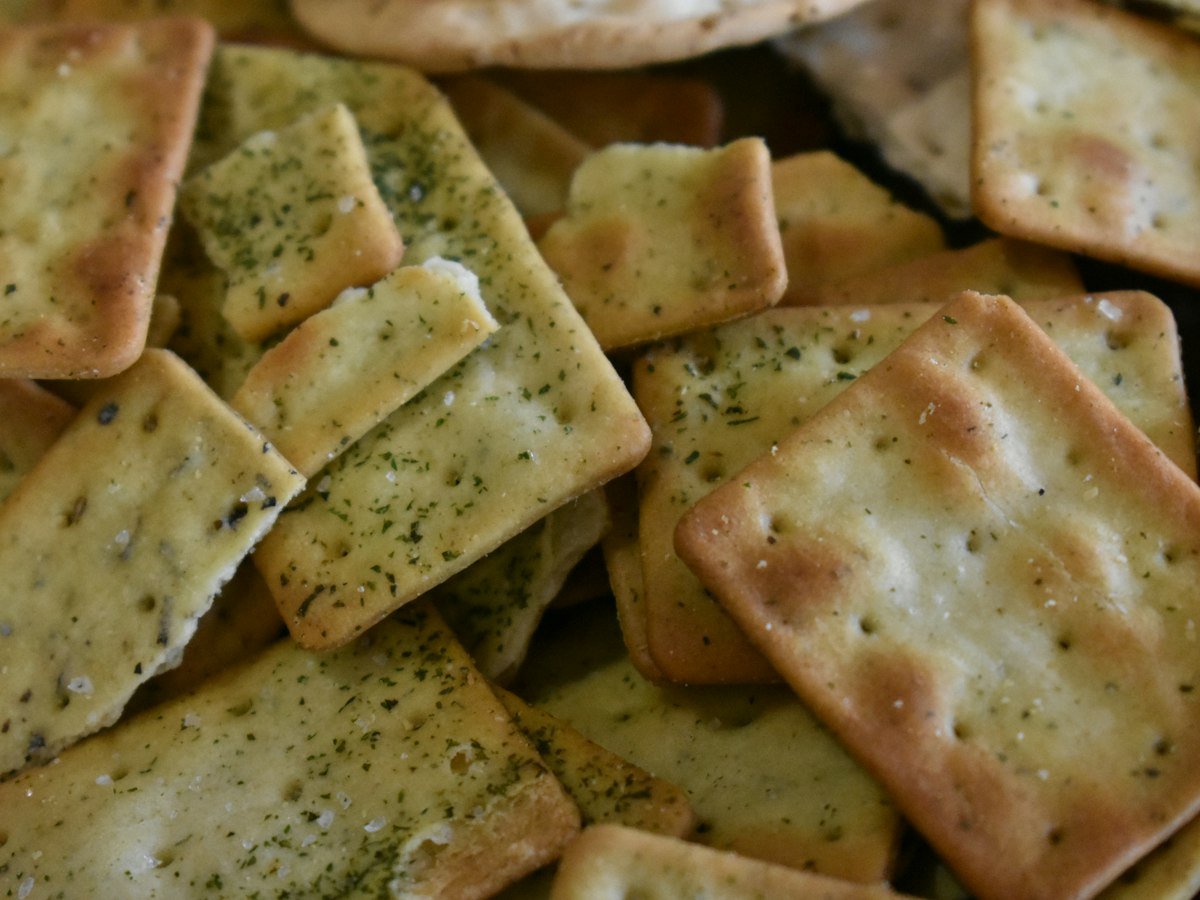
The holes: the classic look comes from docking in neat rows. A fork works, or a clean chopstick tip. Docking lets steam escape so the crackers stay flat.
The salt: brush with a little water and press coarse or flaky salt onto the top before baking, so it sticks.
| Cracker style | Fat | Leavening | Texture | Bake |
|---|---|---|---|---|
| Thin wheat crackers | Olive oil | None or a little baking powder | Crisp, snappy | 400°F, 12–16 min |
| Whole wheat saltines | Butter or shortening | Baking powder plus folding | Light, flaky | 400°F, 12–15 min |
| Seeded crispbread | Oil | None | Hard, crunchy | 350°F, 20–25 min |
| Whole wheat graham crackers | Butter | Baking soda | Crisp, sweet | 350°F, 15–18 min |
Why are my homemade crackers not crispy?
Homemade crackers turn out soft or chewy when the dough is rolled too thick, the crackers are underbaked, or they absorb moisture after baking. Roll to about 1/16 inch, bake until the edges are golden, and cool them completely on the tray before storing. Soft crackers can be re-crisped in a 300°F oven for 5–8 minutes.
Uneven thickness: the thin edges burn while the thick center stays soft. Roll from the center outward and check with your fingertips for thick spots.
Too much water: sticky dough makes tough, hard crackers. Add water slowly.
Overcrowded tray: steam builds up and crackers bake unevenly. Use two trays if needed.
Humid weather: on muggy days, store crackers as soon as they’re fully cool, and add a slice of bread or a small packet of rice to the tin to absorb moisture.

Are whole wheat crackers healthy?
Whole wheat crackers can be a better choice than refined crackers because they have more fiber and keep the grain’s natural nutrients. But many are high in sodium and easy to overeat. Look for whole wheat flour as the first ingredient, at least 3 g fiber per serving, little added sugar, and moderate sodium.
Saltines in particular can be salty, so check the sodium per serving if you’re watching your intake. A portion is usually about 1 ounce (28 g), roughly 5–7 thin crackers. Making them at home lets you control the salt and use olive oil instead of shortening.
Wheat crackers aren’t gluten-free. If you need to know what the labels on store boxes mean, our whole grain vs whole wheat guide explains it. If you’re managing blood pressure or diabetes, please consult your doctor or a registered dietitian about portions.
What flavors and toppings work on whole wheat crackers?
Popular toppings include flaky sea salt, sesame seeds, poppy seeds, everything bagel seasoning, cracked black pepper, rosemary, garlic powder, smoked paprika and grated Parmesan. Mix dried herbs into the dough, and press seeds onto the surface after brushing with water so they stick during baking.
A few combinations we like: rosemary and sea salt with goat cheese; sesame and cumin with hummus; cheddar and black pepper on their own as a snack. For a sweeter cracker, add 1 tablespoon honey or maple syrup to the dough and top with cinnamon sugar.
Storage: keep cooled crackers in an airtight container for up to 2 weeks. Raw dough wraps well and keeps 3 days in the fridge, so you can bake a fresh tray when guests arrive.
Black wheat crackers
Black wheat flour makes dark, nutty crackers with a deep purple-brown color and an earthy flavor. It pairs especially well with seeds and warm spices like sesame, nigella, cumin and ajwain. Because the dark dough hides browning, check the edges by smell and crispness rather than color to avoid overbaking.
Start by replacing half the whole wheat flour in the recipe above with black wheat flour. You can go to 100% black wheat in crackers, since they don’t need much rise. Add an extra tablespoon of water if the dough feels dry, as the bran absorbs more.
How to tell they’re done: the kitchen should smell toasty and nutty, not sharp or burnt. Snap an edge cracker after 2 minutes of cooling. If it breaks cleanly, the tray is ready. If it bends, bake 2–3 minutes more. Thin black wheat crackers can go from done to scorched quickly, so start checking at 10 minutes.
Black wheat crackers look striking on a cheese board next to pale crackers. Like all wheat, black wheat contains gluten. For another black wheat bake, try our black wheat cookies recipe, or read what is black wheat to learn more about the grain.
Frequently Asked Questions
Can I make whole wheat crackers without oil?
Yes. Replace the oil with about 2–3 tablespoons extra water or Greek yogurt. The crackers will be harder and less tender, so roll them extra thin.
What is the difference between saltines and regular crackers?
Saltines are lighter and flakier, with a salty top and docked holes. Regular crackers are usually denser and crisper.
Can I use 100% whole wheat flour for crackers?
Yes. Crackers don’t need to rise, so 100% whole wheat works well. Rest the dough 10–15 minutes so the bran softens before rolling.
How long do homemade crackers last?
Up to 2 weeks in an airtight container at room temperature. Re-crisp in a 300°F oven if they soften.
Are whole wheat crackers gluten-free?
No. Whole wheat crackers contain gluten. Look for crackers made from rice, seeds or nuts and labeled gluten-free instead.
Can I freeze cracker dough?
Yes. Wrap it tightly and freeze for up to 2 months. Thaw in the fridge overnight before rolling.
Final Thoughts
Whole wheat crackers are a simple first project for whole wheat baking: mix, rest, roll thin, dock, and bake until the edges are golden. Fold the dough for flaky saltines, play with seeds and herbs, and try black wheat flour for a dramatic dark cracker. For more whole wheat baking, see our sourdough wheat bread guide.
Have a question about crackers or black wheat? Get in touch with us.
This article is for general information only and is not medical or nutritional advice. Wheat and black wheat contain gluten.